
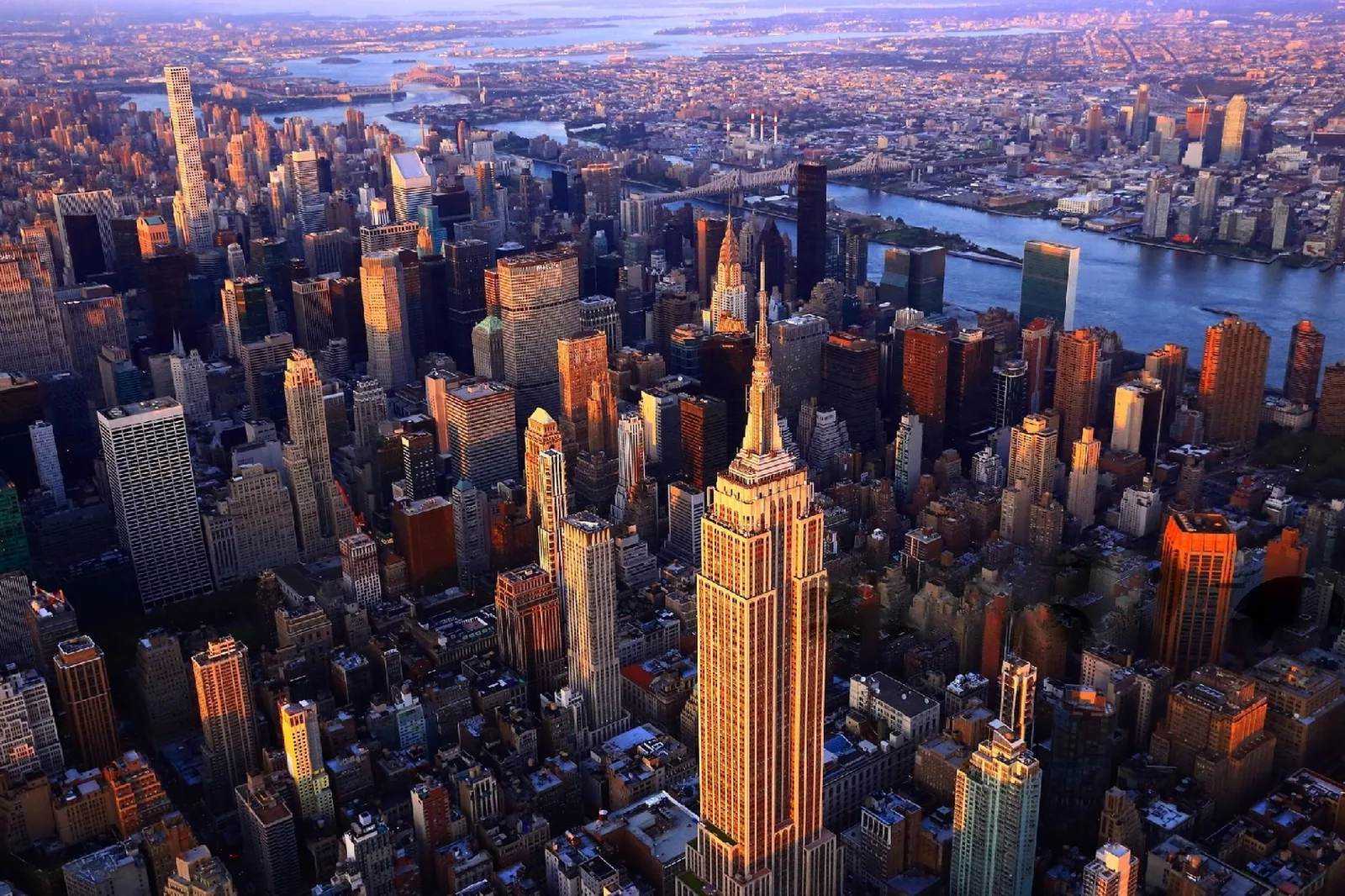
The Empire State Building opened on Fifth Avenue in 1931 and still defines the Midtown skyline. TheNakedNYC documented a sunrise visit to its observatories in 2024, following the route from the building's history galleries to the open-air 86th floor and enclosed 102nd-floor deck.
TheNakedNYC Coverage
YouTube: Sunrise Above Midtown
Instagram: The Observatory at Sunrise
What to Know
Built in 410 Days
Construction began on March 17, 1930, and the building opened May 1, 1931. Shreve, Lamb & Harmon designed the tower, while Starrett Bros. & Eken directed construction. The work took one year and 45 days, with the steel frame rising roughly four and a half stories per week.
An Art Deco Landmark
The 102-story tower was the first building with more than 100 floors. Its steel structure, Indiana limestone and granite exterior, aluminum details, and carefully stepped silhouette made it a defining Art Deco skyscraper.
The City's Tallest View
The building reaches 1,250 feet at its top floor and 1,454 feet at the antenna. The open-air 86th-floor deck wraps around the tower, while the enclosed 102nd-floor deck uses floor-to-ceiling windows for a higher all-weather view.
Exhibits Before the View
The observatory route includes galleries on the second and 80th floors. They cover the former Waldorf-Astoria site, construction, opening day, popular culture, sustainability, and the tower's Otis elevators before visitors reach the decks.
A Record-Setting Rebuild
The observatory experience completed a $165 million redesign in 2019. The project added a dedicated 34th Street entrance, a reworked museum route, and a rebuilt 102nd-floor observatory reached through a glass elevator from the 86th floor.
A Building in Motion
Seventy-three Otis elevators serve the tower, while 1,860 steps connect street level to the 102nd floor. The annual Empire State Building Run-Up has sent racers toward the 86th floor since 1978.
History Above Fifth Avenue
The Empire State Building remained the world's tallest building for nearly 40 years and became a National Historic Landmark in 1986. Its official history documents the construction, opening, lighting, observatory milestones, and later modernization.